Screw compressor for demanding processes
The Universal Genius from AERZEN
AERZEN is one of the pioneers in screw compressor technology and has been supporting the process industry for decades with customized, high-performance, and reliable high-end solutions. Our screw compressors are characterized by maximum efficiency, high cost-effectiveness, and long-term operational reliability, and they set the standard for reliability, performance, and low life-cycle costs (LCC).
Unique versatility. These two words perfectly capture what makes our screw compressors so special: the widest selection of models, the most customization options, and a broad range of accessories. But these stages and compressor series have much more to offer—namely, the engineering expertise of a leading international company that has been continuously working since 1943 on innovations, optimizations, and the refinement of its successful compressors.
With direct or belt drive, oil-free in accordance with ISO 8573-1, Class 0, or oil-injected, with or without a pre-inlet. Originally designed for compressing air, nitrogen, and neutral gases, the AERZEN screw compressor also excels when handling specialty gases, in vacuum operation, or in pre-pressure applications. Let’s put it this way: AERZEN has the right compressor for every application. Right-sized. Without compromise.
AERZEN Screw Compressors at a Glance
The largest selection of models on the market
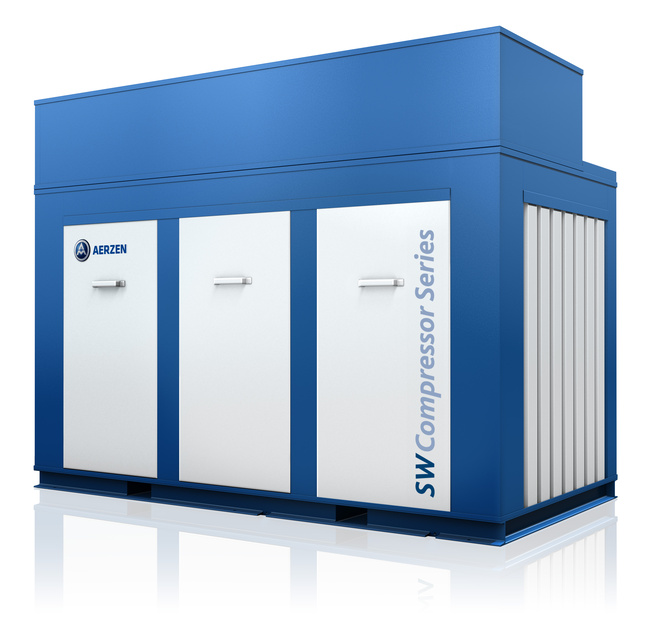
Water-injected single-stage Screw compressor Series SW
- Type of technology
- Screw Compressors
- Differential pressure (Δp)
- 4,000 to 13,000 mbar
- Volume flow
- 144 to 1,170 m3/h
- Medium
- Air, Neutral Gases
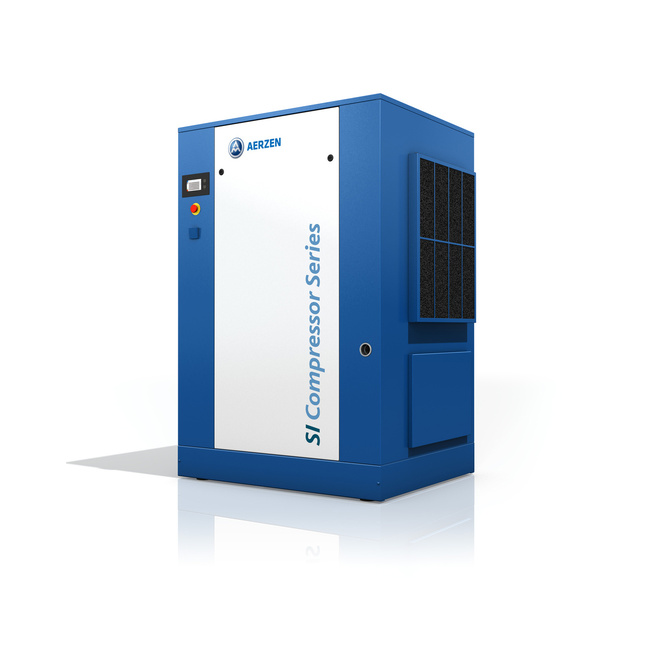
Oil-injected single-stage Screw Compressor
Series SI
- Type of technology
- Screw Compressors
- Differential pressure (Δp)
- 5,500 to 13,000 mbar
- Volume flow
- 25 to 1,662 m3/h
- Medium
- Air, Neutral Gases
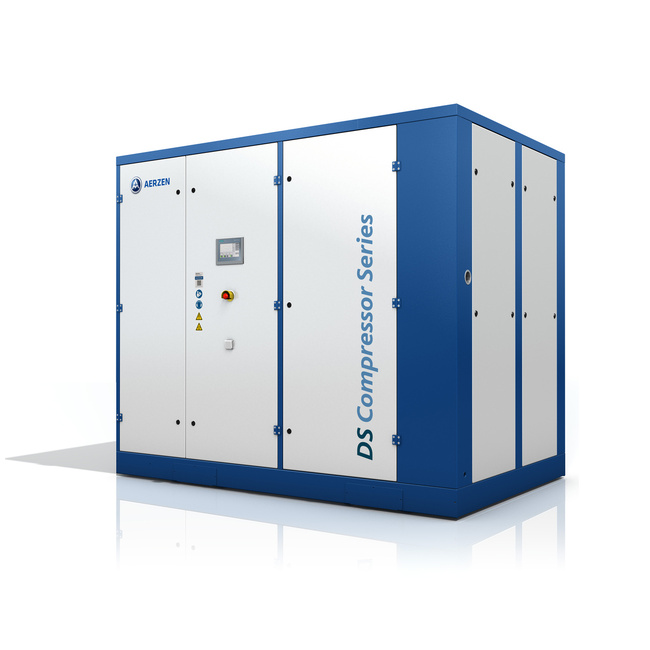
Oil-free double-stage Screw Compressor
Series DS
- Type of technology
- Screw Compressors
- Differential pressure (Δp)
- 4,000 to 10,500 mbar
- Volume flow
- 259 to 3,636 m3/h
- Medium
- Air, Neutral Gases
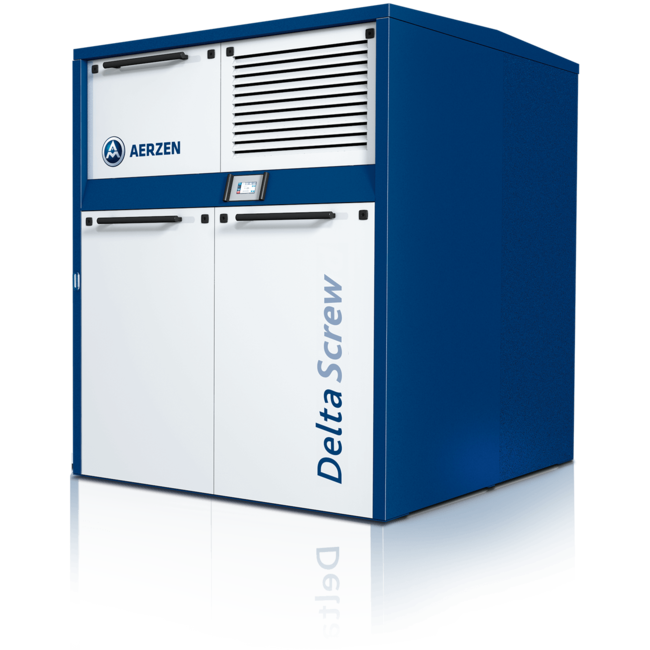
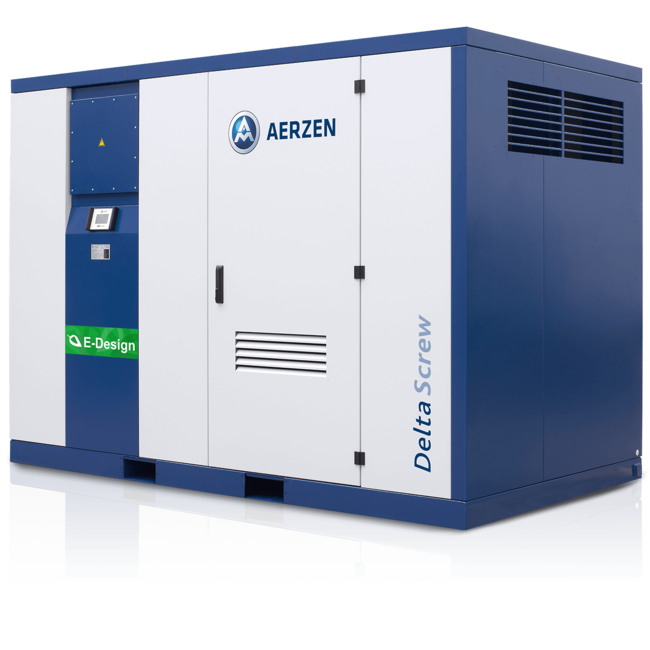
Screw Compressor
Delta Screw Generation 5plus with belt drive
- Type of technology
- Screw Compressors
- Differential pressure (Δp)
- -850 to 3,500 mbar
- Volume flow
- 120 to 2,650 m3/h
- Medium
- Air, Neutral Gases, Landfill and Biogas, Process Gases, Aggressive Gases
Screw Compressor
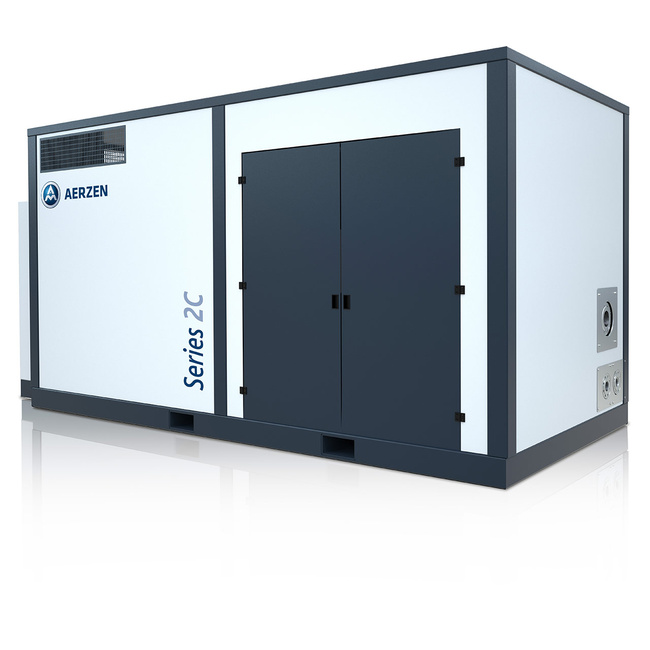
Delta Screw with direct drive
- Type of technology
- Screw Compressors
- Differential pressure (Δp)
- -850 to 3,500 mbar
- Volume flow
- 350 to 15,000 m3/h
- Medium
- Air, Neutral Gases, Aggressive Gases
Oil-free Multi-stage Screw Compressor
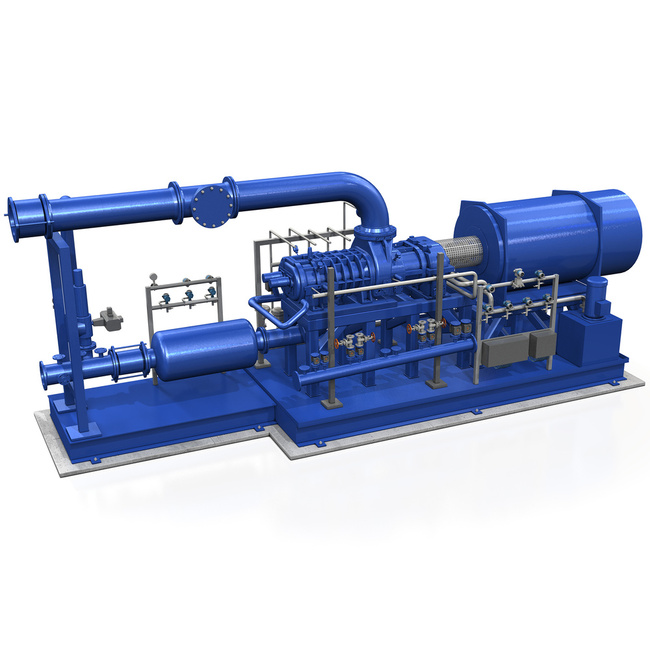
Series 2C
- Type of technology
- Screw Compressors
- Differential pressure (Δp)
- 0 to 11,500 mbar
- Volume flow
- 166 to 9,300 m3/h
- Medium
- Air, Neutral Gases, Special Gases, Inert Gases
Oil-free Screw Compressor
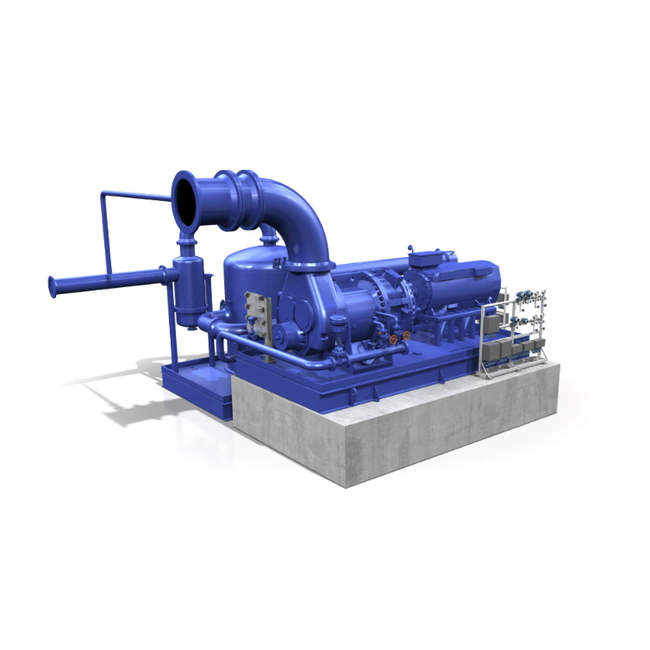
Series VRA
- Type of technology
- Screw Compressors
- Differential pressure (Δp)
- 1,500 to 25,000 mbar
- Volume flow
- 380 to 75,000 m3/h
- Medium
- Process Gases, Aggressive Gases, Air, Neutral Gases
Oil-flooded Screw Compressor
Series VMY
- Type of technology
- Screw Compressors
- Differential pressure (Δp)
- 3,000 to 20,000 mbar
- Volume flow
- 190 to 23,000 m3/h
- Medium
- Process Gases
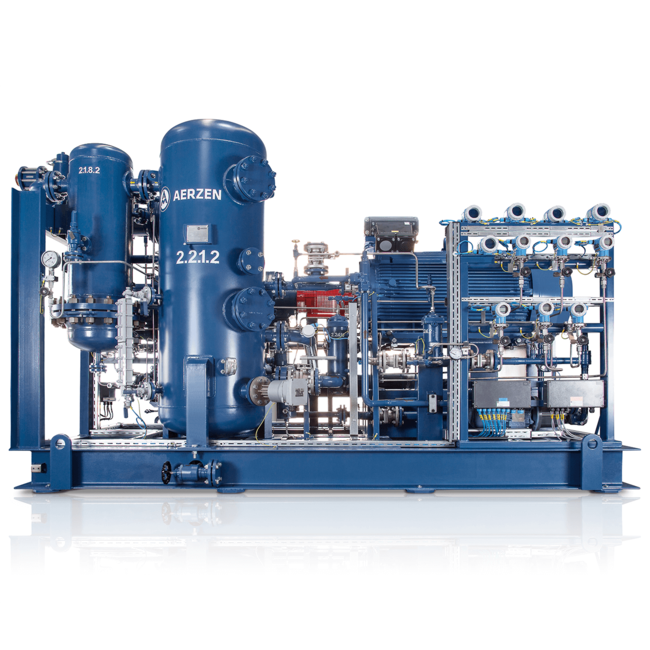
Biogas Compressor
Series VMY
- Type of technology
- Screw Compressors
- Differential pressure (Δp)
- 0 to 25,000 mbar
- Volume flow
- 70 to 23,000 m3/h
- Medium
- Landfill and Biogas, Hydrogen
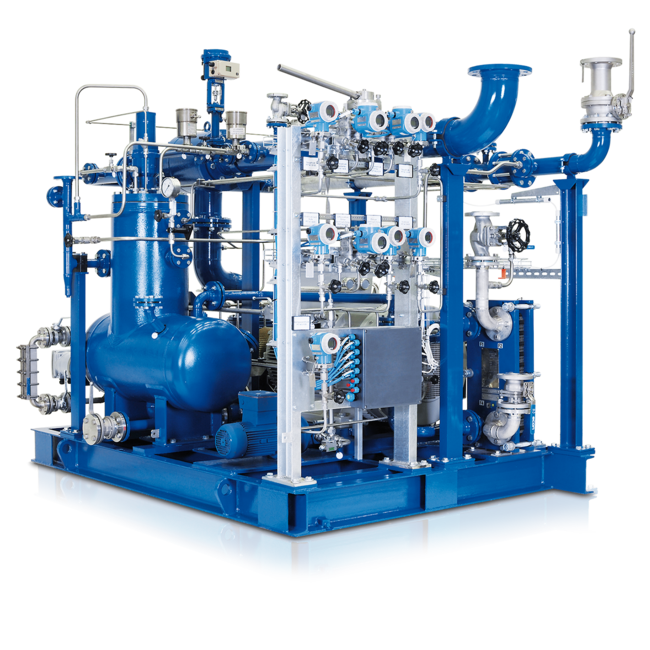
Biogas Compressor
Series VMX
- Type of technology
- Screw Compressors
- Differential pressure (Δp)
- 0 to 15,000 mbar
- Volume flow
- 100 to 2,500 m3/h
- Medium
- Landfill and Biogas, Hydrogen
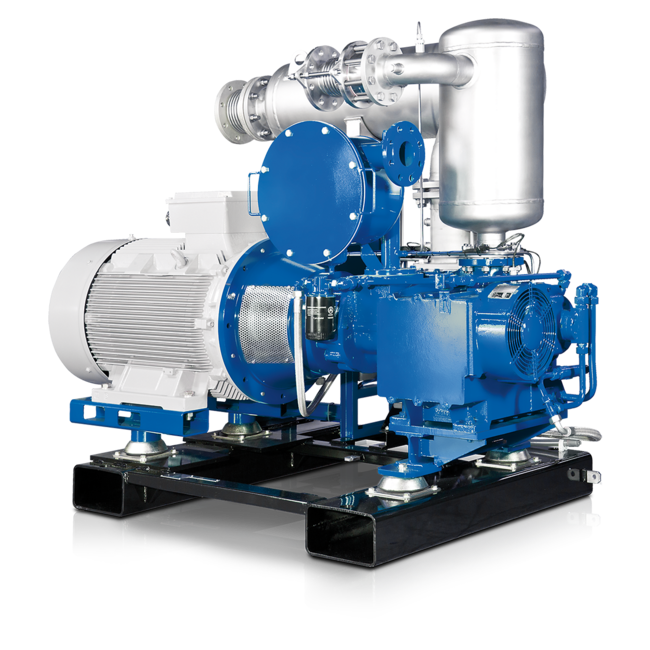
Biogas Compressor
Series C
- Type of technology
- Screw Compressors
- Differential pressure (Δp)
- 0 to 3,500 mbar
- Volume flow
- 150 to 1,900 m3/h
- Medium
- Landfill and Biogas, Hydrogen
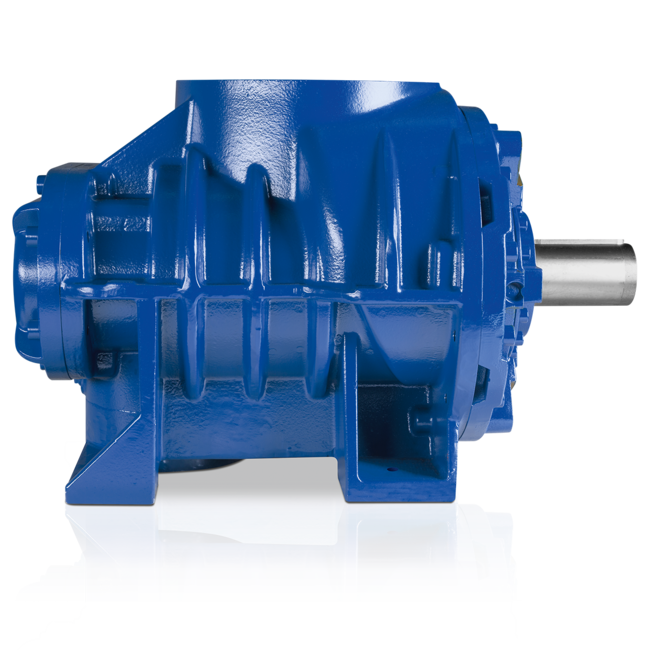
Oil-flooded Screw Compressor Stage
Series VMX
- Type of technology
- Screw Compressors
- Differential pressure (Δp)
- -500 to 13,000 mbar
- Volume flow
- 70 to 3,180 m3/h
- Medium
- Air, Neutral Gases
The Advantages of Our Screw Compressors
High energy efficiency and low life-cycle costs
AERZEN has been manufacturing screw compressors since 1943, making it one of the most experienced manufacturers in the world. This expertise and our know-how as a technology leader contribute to the fact that our compressors are proven to deliver lower downtime, high process reliability, and exceptionally long service life. This is due in no small part to our extremely high quality standards and our “made by AERZEN, engineered in Germany” manufacturing philosophy.
Furthermore, our screw compressors impress with high energy efficiency, top-notch efficiency levels, and a machine design consistently optimized for cost-effectiveness. Even under demanding continuous operation, they offer low wear, low life-cycle costs, low-maintenance operation, and high operational reliability. The result is extremely robust, durable, and user-friendly solutions for a wide range of applications.
A flexible modular system also allows for virtually any combination of compressors and accessories. This ensures that you always receive the optimal screw compressor from AERZEN for your process.
Contact Us Now
AERZEN Screw Compressor – Your Benefits:
Reliable compressed air production is essential in industry, power plants, and many other sectors. AERZEN screw compressors have proven themselves worldwide in a wide range of applications and industries. They operate reliably in a wide variety of temperature ranges, both indoors and outdoors. Whether it’s air, neutral gases, or specialty gases: Thanks to their high versatility, they are suitable for demanding conveying, compression, and vacuum applications across a broad spectrum of industrial uses.
The oil-free and oil-injected screw compressors reliably convey and compress in numerous applications, such as pneumatic conveying, chemical and process engineering, and compressed air technology. Typical applications also include the aeration of sewage treatment tanks, keeping lakes and harbor facilities ice-free, supplying oxidation air to power plants, and use as jet starters for aircraft turbines.
Applications:
- Reliable operation worldwide, in a wide range of temperature zones
- Suitable for indoor and outdoor installation
- Compression of air, neutral gases, and specialty gases
- Pneumatic conveying with air or nitrogen
- Homogenization, as well as loading and unloading
- Vacuum generation, gas/air mixing systems, and pre-pressurization applications
- Work air, workshop air, and control air
Industries:
- Chemical and Petrochemical
- Cement Industry
- Food and Beverage Industry
- Power Plant Technology
- Glass Industry
- Paper Industry
- Plastics Industry
- Steel and Iron Industry
- Textile Industry
- Pharmaceutical and Cosmetics Industry
- Medical Technology
- Mining and Metallurgy
- Electronics Industry, Solar
- Oil and Gas Industry
- Biogas
- Maritime Applications
Screw compressors are twin-shaft rotary piston machines. They operate on the displacement principle with internal compression and are known as positive-displacement compressors. This applies to all screw compressors. Their operation is based on two intermeshing rotors that continuously draw in the medium, compress it, and deliver it to the discharge port.
What sets AERZEN apart is that we have elevated reliability, ease of maintenance, user-friendliness, flexibility, and energy efficiency to a universal principle. The result is a series of unique design features. One example of this is the efficiency coefficients of the AERZEN 3+4 VML and 4+6 VM profiles. Compared to standard compressors, they save a considerable amount of energy. And what is actually the ultimate in compressor technology? The ultimate is the new E-compressors from AERZEN. With an efficiency increase of up to 6%, they unlock even more valuable potential.
How a screw compressor works:
- Displacement principle with internal compression
- Designed as a positive-displacement compressor
- Twin-shaft rotary piston machines
- Two intermeshing, helical rotors
- Continuous compression of the fluid
There are single- and double-rotor rotary compressors, but when people talk about screw compressors, they usually mean two rotors arranged in parallel with different screw profiles. These meshe together like gears and compress the gas located between the profiles through displacement. Unless the machines are oil-free, oil is injected for cooling and sealing. This process, known as liquid cooling, is particularly necessary when there are high pressure differentials between the suction and discharge sides. Oil can also help minimize wear and reduce temperatures. Top-of-the-line oil-free designs do not require this measure and feature low friction thanks to high-precision manufacturing processes and synchronized gears. It is guaranteed that no lubricant enters the chamber at any time—which qualifies the new models as completely oil-free compressors. This is particularly advantageous in applications with high requirements for purity and process reliability, such as in the food and pharmaceutical industries, as well as in chemical and process engineering.
Economic considerations are prompting many companies to switch to screw compressors. A key reason for this is their high compression efficiency, which has a positive impact on energy consumption. This is a decisive factor, especially in times of high energy prices. Heat recovery is also becoming increasingly important in this context.
Due to their basic design, screw compressors are clearly superior to reciprocating compressors in terms of efficiency. This enables a noticeable reduction in energy costs and CO2 emissions during operation. While piston compressors lose about one-tenth of the intake air through the piston rings, the pressure loss in screw compressors is significantly lower and rarely exceeds 0.1 to 0.2 percent.
The energy efficiency of screw compressors can be further increased by optimizing the flow conditions in the compression process. Improvements to the air inflow into the compressor unit have proven to be particularly effective in this regard. In AERZEN’s latest 5plus generation of machines, all components are precisely coordinated to ensure optimal flow behavior. The reduction in pressure losses and the improvement of the intake and discharge ports help ensure that the desired discharge pressure is maintained in a stable and reliable manner. The additional sound insulation not only reduces noise during operation but also optimizes flow characteristics.
Premium motors are available as needed to meet the requirements of current energy efficiency classes. Future-proofing is particularly important to customers in this context, as durability is also measured by whether or not future requirements regarding energy efficiency classes can be met.
Modern rotary compressors are easy to operate and maintain efficiently. Digitalization simplifies processes, increases transparency, and reduces additional follow-up costs. In addition, screw compressors generally experience less wear and tear. The result is robust, reliable, and easy-to-maintain machines for a wide range of applications.
The smooth-running V-belt drive on the 5plus generation machines allows for the installation of different pulleys to achieve the desired gear ratio. Changing the pulleys is also easy to do retroactively. The screw compressor remains flexible when the desired parameters change and does not need to be replaced with another model that has inflexible settings. Maintenance requirements for the V-belt drive are extremely low, as the correct tension is ensured by its own weight. On many units, the speed can also be controlled electronically.
High precision and exact maintenance of the desired pressure are an absolute must in most applications. Control can then be performed, for example, directly via an integrated control element on the housing. Because the control elements are located on the front of the units, the units can be arranged side by side to save space. With this design, it is even possible to check the oil level while the unit is running. Special AERZEN oils extend oil change intervals to twice the specified intervals.
A major advantage of screw compressors is their quiet operation. Unlike piston compressors, there is no need to stop masses at their respective dead centers, which results in significantly lower vibrations inside a rotary compressor. This quiet operation can be further optimized through design measures. At the same time, intelligent sound insulation offers additional benefits for safety- and hygiene-critical applications.
The use of an innovative silencer design reduces the sound pressure level. It also serves as an effective spark arrestor. Machines equipped with this feature are also approved for use in explosion-protected areas. Thanks to its optimal sound-dampening properties, no additional sound-insulation materials are required. This eliminates the risk of contamination from damaged insulation materials or similar sources. The associated maintenance work is also eliminated.
Particularly in hygiene-critical areas of the food industry and in chemical plants, effective sound insulation without the risk of contamination is a key requirement in addition to the need for oil-free compressors. Where necessary, a compressed air filter can be used to further purify the compressed air. In the medical sector, special filters for treating compressed air are just as common as separation systems for other residues. To prevent unwanted moisture from entering the application area, aftercoolers and dryers ensure effective dehumidification of the compressed air.
Frequently Asked Questions About Screw Compressors
Screw compressors, also known as screw compressors, are rotary positive-displacement compressors with two intermeshing rotors. They operate on the principle of positive displacement with internal compression and are used for the continuous compression of air and gases.
Whether an oil-injected or oil-free screw compressor is the right solution depends on the process, the medium, and the required compressed air quality. Oil-injected models offer advantages in terms of cooling, sealing, and wear reduction. Oil-free screw compressors are used wherever the highest level of purity and the complete absence of lubricant contamination are critical, such as in sensitive processes in the food or pharmaceutical industries.
Screw compressors are considered particularly energy-efficient because they continuously compress air with minimal pressure losses. Compared to reciprocating compressors, they generally operate more efficiently, lower energy consumption, and thereby also reduce operating costs. Additional efficiency gains can be achieved through optimized flow conditions, low pressure losses, and the use of highly efficient motors.
Screw compressors are twin-shaft rotary piston machines that operate on the displacement principle with internal compression. Compression occurs through the rotation of two intermeshing, helical rotors. In this process, the intake air is guided from the suction port to the discharge port through chambers that continuously decrease in size, where it is compressed and then discharged into the discharge line.
A screw compressor continuously compresses air using two intermeshing rotors, thereby producing a steady flow of air. A reciprocating compressor compresses air using pistons that move up and down, resulting in a pulsating flow of air. Screw compressors are generally more efficient, run more quietly, require less maintenance, and are better suited for continuous operation.
Screw compressors require very little maintenance because they have few moving parts. Since no oscillating forces are generated, the compressor stages are less prone to cracks and other signs of wear.